• slider-image
  • slider-image
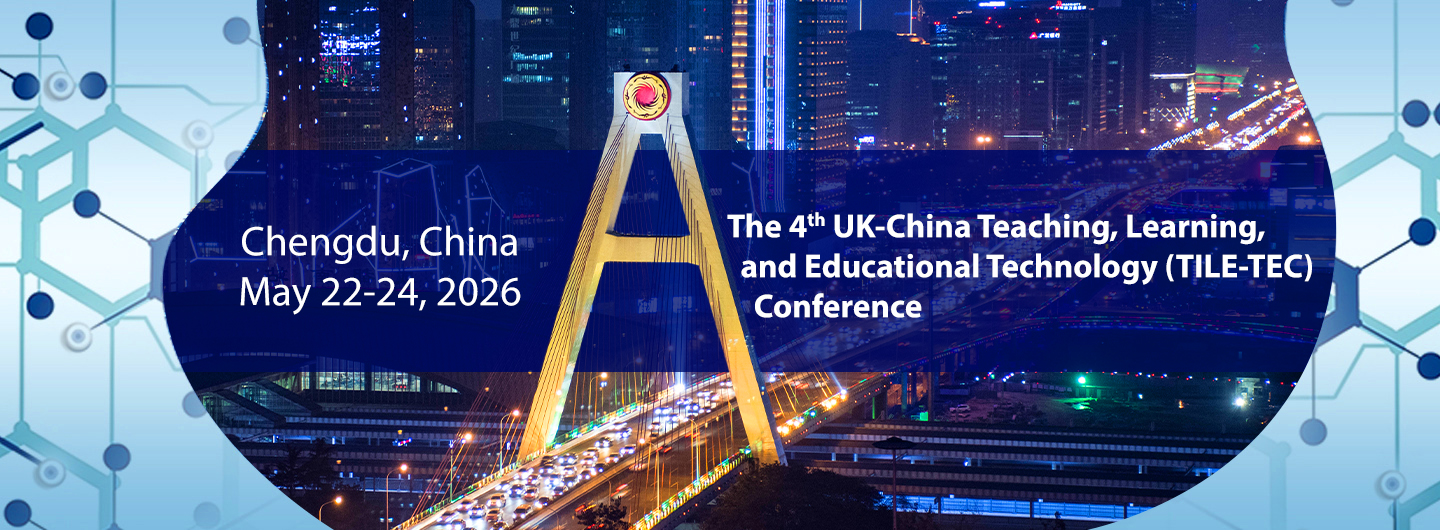
Welcome to TILE-TEC 2026 @ Chengdu, China

Theme: Generative AI for Innovation, Sustainability, and Human-Centred Transformation in Transnational Education.


The 4th UK-China Teaching, Learning, and Educational Technology (TILE-TEC) Conference will be held in Chengdu, China, from 22–24 May 2026. The conference aims to bring together academics, researchers, educators, educational developers, students, and industry professionals from the UK, China, and beyond to explore the transformative role of Generative Artificial Intelligence (GenAI) in higher education, with particular emphasis on Transnational Education (TNE).
As Generative AI technologies rapidly reshape teaching, learning, assessment, and student support, higher education institutions face both unprecedented opportunities and complex challenges. These include questions of academic integrity, ethics, sustainability, staff and student preparedness, and the redefinition of pedagogical and professional roles. At the same time, AI-driven innovation offers powerful tools to enhance learning personalization, improve student engagement, support inclusive education, and promote sustainable educational practices across global and cross-cultural contexts.
Beyond pedagogy, GenAI is increasingly influencing institutional policies, governance frameworks, and quality assurance processes, offering new possibilities to improve decision-making, streamline administrative workflows, enhance monitoring and reporting, and increase the overall efficiency and effectiveness of educational operations. The responsible integration of Gen AI into institutional systems raises important questions about regulation, accountability, transparency, and long-term organisational sustainability.
In the TNE context, where the first language of many students is not English, GenAI also presents significant opportunities for language learning, academic communication, and cross-cultural engagement. AI-powered tools can support language development, improve academic writing and comprehension, and facilitate more inclusive participation in international learning environments, while also raising important considerations regarding authenticity, assessment, and learner independence.
TILE-TEC 2026 provides a collaborative platform to exchange research findings, share evidence-based practices, and critically reflect on policy, pedagogy, governance, and technology in AI-enabled education. The conference particularly foregrounds human-centred, ethical, and sustainable approaches to AI adoption in TNE, ensuring that technological advancement aligns with educational values, social responsibility, institutional quality, and long-term global impact.

Conference Topics

1. Generative AI in Teaching, Learning, and Curriculum Design:
  • Innovative uses of GenAI to enhance instructional design, adaptive learning, content creation, and discipline-specific pedagogy.
2. AI-Enabled Assessment, Feedback, and Academic Integrity:
  • AI applications in formative and summative assessment, feedback automation, and addressing challenges related to plagiarism, authorship, and originality.
3. Student Engagement, Personalisation, and Learning Analytics:
  • Leveraging AI to improve student participation, personalise learning pathways, and support data-informed decision-making in education.
4. Ethics, Trust, and Data Privacy in AI-Powered Education:
  • Ethical frameworks, governance, data protection, algorithmic bias, transparency, and equitable access in AI-driven educational systems.
5. Human-Centred and Sustainable Education in the AI Era:
  • Embedding sustainability principles, social responsibility, and human values into AI-enhanced engineering and higher education curricula.
6. Student Support, Wellbeing, and Employability in AI-Driven TNE:
  • AI-supported approaches to academic advising, career planning, counselling, cross-cultural communication, leadership development, and lifelong learning.
7. Redefining the Role of Educators and Academic Leadership:
  • Faculty development, changing teaching roles, professional identity, and leadership in AI-enabled and digitally transformed learning environments.
8. Industry 5.0, Innovation, and Entrepreneurship Education:
  • Preparing students for human-centric, AI-integrated workplaces through entrepreneurship, innovation, and future-ready skill development.
9. Blended, Hybrid, and Immersive Learning Technologies:
  • Design and evaluation of flexible, immersive, and technology-enhanced learning environments, including virtual labs, simulations, and extended reality.

Important Dates

Mar. 22, 2026
Paper Submission Deadline
Apr. 20, 2026
Acceptance Notification
Apr. 27, 2026
Author Registration
May 4, 2026
Final Manuscript (for full paper)
Final Revised Abstract and Slides

Conference Publication

Accepted papers will be submitted for inclusion into IEEE Xplore subject to meeting IEEE Xplore's scope and quality requirements and can be retrieved by EI Compendex and Scopus.
Accepted papers that do not meet IEEE Xplore's requirements will be scheduled exclusively for oral or poster presentation.