How do we learn in ways that truly last? Neuroscience and Psychology has spent decades uncovering the biological mechanisms behind memory consolidation, skill acquisition, and durable knowledge — and the answers are both surprising and deeply practical. In this talk, I draw on findings from cognitive and systems neuroscience to illuminate why some learning sticks while other knowledge fades, and what this means for how we design educational experiences.
From the role of spaced retrieval and interleaving to the neuroscience of prediction error and emotional salience, the brain offers a remarkably clear blueprint for effective pedagogy. But we are now at an inflection point: artificial intelligence tools are reshaping how students learn, how teachers teach, and how institutions think about educational technology. These tools hold genuine promise - enabling personalised learning pathways, adaptive feedback, and scalable support - yet they also carry risks that are not always visible at first glance.
When AI systems do cognitive work for the learner rather than with them, they may short-circuit the very struggles that drive durable learning. Difficulty, desirable or otherwise, is not a bug in the learning process - it is often the feature. This talk explores how educators and technologists can harness AI in ways that are neurologically grounded, pedagogically sound, and alert to the pitfalls of cognitive offloading, over-reliance, and the illusion of competence.
The goal is not to be cautious about AI, nor uncritically enthusiastic - but to be intelligent about it, in every sense of the word.

Keynote and Invited Speakers
You are here:
- Home
- Keynote and Invited Speakers
To be updated.

Beyond the Illusion of Knowing: Neuroscience, AI, and the Architecture of Durable Learning
Prof. Stephany Biello is the professor of Neuroscience and Biopsychology (Psychology & Neuroscience Education Hub) and the dean of Learning and Teaching (Science & Engineering College Senior Management).She has over 27 years of experience as a Sleep Scientist. She completed her PhD at the University of Toronto in Canada and has a particular interest in biological rhythms and sleep. Her current research programme is aimed at understanding how the clock organises the physiological and behavioural changes that occur on a daily basis, and the implications for health and well-being. She has experience in Higher Education in the UK, and developing strategy in that context. She has acted as both Head, and Deputy Head of the School of Psychology at the University of Glasgow. She currently serves as Dean for Learning in the College of Science and Engineering. She has an interest in supporting young people in pursuing Science as a career and having an equal opportunity to do this. To this end, she has continuously participated in numerous public information of Science events, and Chaired the development of the Accessible and Inclusive Learning Policy at the University of Glasgow.
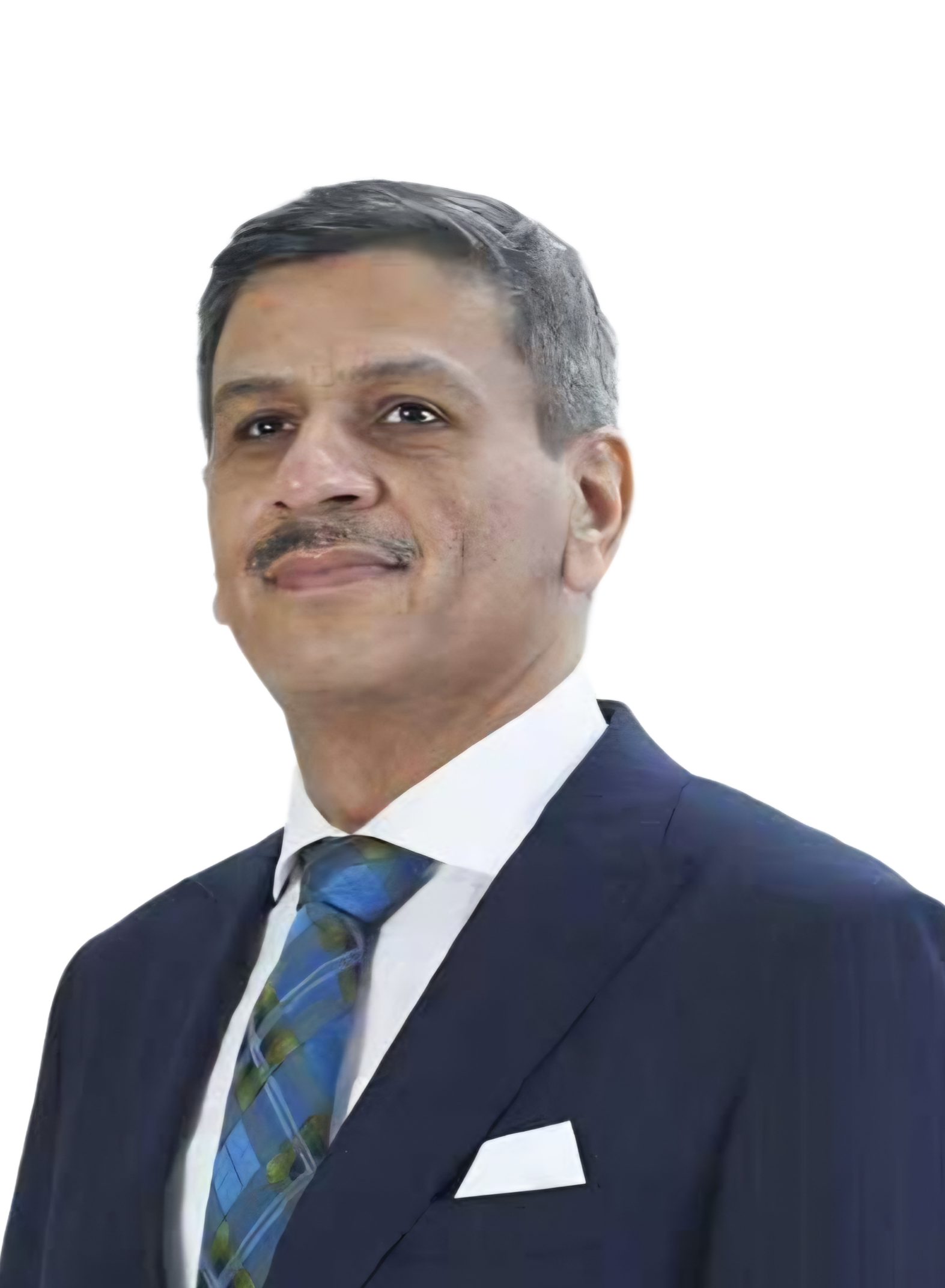
Driven by Purpose: An Educational Framework for A Sustainable, Equitable, and Enjoyable Future
The story of human civilisation can be told through how we shaped our world with technology and how technology shaped us. In this talk, Mushtak Al-Atabi explores how technology has replaced humans in the physical and cognitive domains of labour and how the emotional domain is the ultimate space for human progress, impact, and relevance. As AI progressively makes cognitive tasks a commodity, Mushtak makes the case for an education system that prioritises the discovery of personal purpose as key to unlocking human motivation to learn, explore, and collaborate.
Professor Mushtak Al-Atabi is a storyteller, innovative educator, negotiation scholar, chartered engineer, and purpose-driven leader. He developed Purpose-Driven Education, delivered Malaysia’s first MOOC, pioneered the CDIO (Conceive, Design, Implement, Operate) framework in Malaysia, and initiated the first engineering Grand Challenges Scholar Programme outside the US.
Besides being the Provost and CEO of Heriot-Watt University Malaysia, he is the Chairman of the Vice-Chancellors’ Council for Private Universities in Malaysia, a Board member at the British Malaysian Chamber of Commerce, and one of 10 experts who authored the Malaysian Higher Education Blueprint 2026-2035. Besides his numerous academic papers, he published a number of books, including “The Collaboration Equation,” “Driven By Purpose,” “Think Like an Engineer,” and “Leading With Stories,” and he has received numerous awards and honours. He is a Fellow of the Institution of Mechanical Engineers (UK).
.png)
Enhancing Students' Global Competency through a Composite Approach
In a world characterized by volatility, uncertainty, complexity, and ambiguity (VUCA), the traditional paradigms of international education are being challenged. The demand is no longer merely for students who can "study abroad," but for architects of global innovation who can navigate the intersection of culture, technology, and global governance.
Rather than viewing global competence as an add-on, the Youth Global Competence Development (GCD) Project proposes a framework that grounds students in their cultural heritage while equipping them with the cognitive flexibility to lead in a global context. At the heart of this transformative framework lies the “999 Model” – a composite approach -- which synthesizes interdisciplinary knowledge and practical application, ensuring measurable competency growth of the students in critical thinking, collaboration, and intercultural communications.
Recognizing that technology is the great accelerant of change, it is pivotal to
integrate artificial intelligence (AI) into the educational ecosystem. The GCD project will embed AI literacy as a core competency, ensuring students are creators, not just consumers, of technology, aligning with China's rapid AI advancements.
Looking toward the next five years, this talk addresses the strategic redefinition the goals and priorities of the GCD project, highlighting the importance of expanding the “GCD Centers” to serve as hubs for international education development, and the significance of addressing the unique needs of the TNE students navigating hybrid academic landscapes, as in the Sino-foreign Cooperative Education Institutions and Sino-foreign Cooperative Education Programs.
Mr. Wei Wang is a distinguished leader in international education with over four decades of experience across government, industry, and global partnerships. He holds a Bachelor’s degree from Shanghai Jiao Tong University and a Master’s degree in Education (Training and Development) from the University of Manchester, UK. He began his career at China’s Ministry of Education, where he served for 15 years in senior roles, including Deputy Director, advancing international cooperation with organizations such as UNESCO, UNDP, UNFPA, and APEC. In 2000, he moved to the private sector, joining Ambow Technologies before founding Wiseway, which grew into one of China’s leading international student recruitment organizations with a nationwide presence. In 2008, Wiseway became part of East & West International Education Group (EWIE), a global education platform spanning student recruitment, pathway programmes, mobility, employability, and university partnerships. The Group was listed in 2016, with Mr. Wang as Founder and Chairman. Widely recognized in the sector, Mr. Wang also holds guest professorships at Sun Yat-sen University and Jiangsu Normal University.

From Experimentation to Institutionalization: Governing AI as a System-Level Transformation in Higher Education
While artificial intelligence has rapidly entered classrooms and assessment practices, as well as key operational areas such as student admissions, advising, and administrative services, most higher education institutions remain in a phase of fragmented experimentation rather than systemic adoption. Recent evidence from UNESCO and EDUCAUSE points to a growing disconnect between institutional ambition and operational readiness, where AI initiatives are often driven by isolated efforts rather than embedded within coherent institutional strategies. This keynote explores what it means to design an AI-enabled university, moving beyond isolated tools toward institution-wide transformation. It shifts the focus from experimentation to institutionalization, examining how universities can move from fragmented initiatives to coherent, governed, and sustainable models of AI adoption. The session introduces a strategic framework for AI integration that addresses the institutional architecture required to support transformation, including governance, policy, and infrastructure, while also reimagining teaching and learning systems through AI augmentation. It highlights the growing importance of embedding AI literacy as a core graduate competency and explores how institutions can scale innovation through structured experimentation models, supported by evidence-based approaches to measure impact on learning and outcomes. As part of this perspective, the keynote will briefly present the AI Adoption in Teaching and Learning Framework, co-developed by CLICKS in collaboration with Studiosity and a network of universities in the UAE. The framework is anchored in three core pillars—integrating AI within the curriculum, reshaping teaching and learning practices, and rethinking assessment in AI-driven contexts—supported by key enablers related to capacity building, inclusive infrastructure, and continuous experimentation. These are underpinned by guiding principles focused on policy and governance, ethical AI use and academic integrity, and equity and responsible practice. Importantly, the keynote will address the tension between rapid innovation and responsible adoption, emphasizing the role of leadership in navigating ethics, quality assurance, and long-term sustainability. It ultimately positions AI not as a disruption to be managed, but as an opportunity to redefine the university’s role in a rapidly evolving knowledge and skills economy.
Dr. Narimane is the Founder and the CEO of the Center of Learning Innovations and Customized Knowledge Solutions (CLICKS). Previously she was the Assistant Chancellor for Learning and Academic Development (Provost) at the Hamdan Bin Mohammed Smart University in Dubai, UAE where she has established and led the academic, research and e-learning vision of the first online University to be recognized and accredited by the Ministry of Higher Education and Scientific Research in the UAE. She has assumed other leadership roles including acting as a Dean for Students Affairs, a Dean for Learning and Teaching and a Director of e-learning. Drawing on 20 years of experience Dr. Hadj-Hamou expertise and professional background span areas such as technology integration and e-learning in higher education; teaching and learning, quality assurance and accreditation and governance. She has been the driving force in the promotion of online education and blended learning in the Region since 2004 by leading many pioneering projects and initiatives. She is Founder and was the first elected President of the Middle East e-learning Association (MEeA), led the establishment of the MENA Association of University Presidents and chairs the MENA Higher Education Leadership Forum Over the years she has delivered more than 160 keynote addresses and workshops and led numerous round-tables and panel discussions. Dr. Hadj-Hamou has also been active in publishing articles, book chapters, case studies, and was the founder and editor of the International Journal of Excellence in e-learning for several years. Dr. Narimane consults for various HEIs across the region in areas related to QA, technology integration, governance and strategy development and serves as an expert for various regional UNESCO offices. In addition she acts as an external reviewer for accreditation agencies and provides advice on QA related matters. Dr. Hadj-Hamou was listed among the 200 most influential Arab Women by Forbes Magazine in 2014; have received the Arab Women Award for Education in 2016 and the Influential Education Leaders Award at the University of Cambridge in 2017.

Redefining the Role of Educators and Academic Leadership?
“Traditional” models of education have become increasingly unsustainable and misaligned with contemporary needs amid accelerating pressures, including technological change, rising costs of formal education, demands for flexibility from students and families, financial and economic constraints, and evolving workforce requirements. Responses to these challenges have often been limited to adjustments in daily teaching practice and the redesign of module and program delivery. While such changes are valuable, they represent only a small part of the transformation required.The more profound impact on higher education institutions remains under-addressed: formal education providers are rapidly becoming obsolete in practice and in public perception. As a central driver of this shift, AI requires institutional leaders to move beyond incremental program or module adjustments and rethink the institutional model in its entirety to ensure long-term viability.This presentation addresses the key structural, cultural, and human-related issues that institutional leadership must evaluate and resolve to prevent universities from becoming irrelevant in an era of rapid change, rising expectations, and intensified competition for students.
Dr. Tim London is Director of Learning and Teaching and Senior Associate Professor at the Academy of Future Education in Xi’an Jiaotong-Liverpool University. His research and teaching focus on leadership, organizational design and redesign, and systemic improvement. He holds a BA in Psychology (Colgate University, USA), an MA in Educational Leadership (University of Illinois Springfield, USA), a PGCert in Human Resource Development (Indiana State University, USA), a PGCert in Higher Education Teaching and an LLM in Corporate Governance & Public Policy (Queen’s University Belfast, UK), an MBA focused on Entrepreneurship (University of Liverpool, UK), and an EdD in Leadership, Policy, and Organizations (Peabody College of Vanderbilt University, USA).
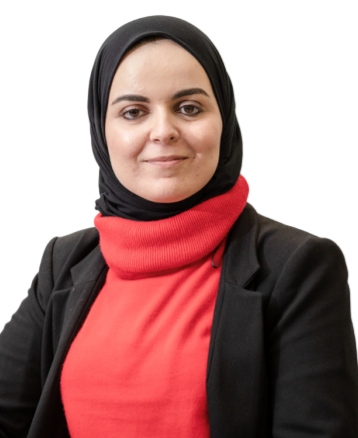
Inclusive Assessment: Unpacking Hidden Barriers in Assessment Question Design
Assessment in higher education is often assumed to be clear, transparent, and fair. However, the design of assessment questions can embed hidden barriers that shape how students interpret and respond to tasks, with implications for equity and attainment.
These barriers are rarely explicit but can disproportionately affect students with specific learning difficulties, cognitive impairments, and those who speak English as an additional language. As a result, challenges are often framed as student deficits rather than issues of assessment design.
This session presents work led by Dr Salma Al Arefi (University of Leeds) to develop a practical framework for identifying and addressing hidden barriers in assessment question design. The work adopts an inclusive-by-design approach, shifting the focus from supporting students to rethinking how assessment itself is constructed, including the role of language, structure, and implicit expectations.
Drawing on applied work in engineering education, the session demonstrates how small, deliberate changes to question design can improve clarity, reduce cognitive load, and support more equitable engagement. The session will also share a practical tool that participants can use to review and redesign their own assessment questions.
The presentation will further outline how this work is being extended through a Quality Assurance Agency (QAA)-funded Collaborative Enhancement Project, supporting wider adoption across institutions.
Dr. Salma Al Arefi is a Lecturer and Deputy Director of Student Education (Student Success) in the School of Electronic and Electrical Engineering at the University of Leeds. Her pedagogical research focuses on inclusive engineering education, with particular emphasis on inclusive-by-design assessment and the hidden curriculum. She is an award-winning educator, recognised through multiple awards including the University of Leeds Teaching Award (2021), and as a national finalist for the IET Young Woman Engineer Award (2024). Her work on inclusive assessment design is currently being extended through a competitive Quality Assurance Agency (QAA)-funded Collaborative Enhancement Project. She holds a PhD in Electronic Engineering and Computing from the University of Essex, UK, is a Chartered Engineer, a Senior Fellow of the Higher Education Academy, and a Fellow of the Women’s Engineering Society.
.png)
The Role of AI in Trans-National Education Partnerships
The success of a transnational education (TNE) partnership is often judged on income alone, when in fact the success and longevity of a partnership is measured through the student experience and outcomes and the strength of the relationship between the partners. Effective communication between partners has a direct impact upon the student journey. Missed communication from the awarding partner or unclear protocols (whether for student administration or pastoral care), can lead to unintended consequences for the students and additional workload for the operational staff. How then do we harness the potential of AI to deliver effective, cross-cultural collaboration between TNE partners? How will this operate within data sharing legislation? In this session, we will explore how AI can support communication between TNE partners: both in terms of how it can be deployed to support the relationship itself, but also the engagement with students; and at what point do we acknowledge that human interaction is essential?
Dr. Lindsay Jones has over twenty years' experience in international education and business development. A highly experienced TNE practitioner, Lindsay has developed and delivered programmes through partners in the Gulf, China, India, Singapore, Malaysia, Uzbekistan, the Caribbean, Hong Kong and the USA. A Higher Education Leader in the Gulf Higher Education Network, Lindsay regularly contributes to TNE best practice seminars including British Council Going Global events. Lindsay’s interest in international education and cultural exchange began as an undergraduate student undertaking placements in Germany and The Netherlands. Following her PhD at Cardiff University, Lindsay undertook postdoctoral research positions in Ireland and the USA. On returning to the UK, Lindsay led on the development and operational management of global programmes at Manchester Business School Worldwide, before moving to Bangor University and latterly Queen Mary University of London as Head of Global Business Development. Lindsay’s area of interest is the TNE partnership lifecycle and the importance of communication and cultural understanding.